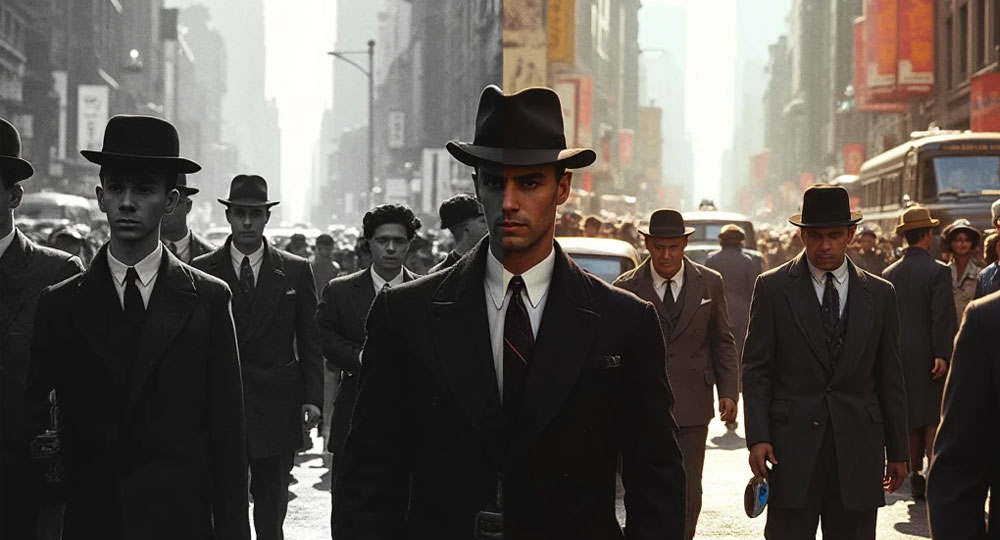
When and why did men stop wearing hats as an everyday accessory?
If you look at any photograph of a city street from the early 20th century, you’ll see a sea of hats. From dapper fedoras to sturdy bowlers, hardly a single bare head was in sight. A man simply would not leave his house without his hat. Yet, just a few decades later, that ubiquitous symbol of male identity had all but vanished from everyday life. The story of why men stopped wearing hats is not a simple tale of a single fashion faux pas, but a fascinating reflection of profound social, technological, and cultural shifts that reshaped the modern world. The decline of the hat was a silent witness to the rise of the automobile, the blurring of social classes, and a new desire for personal informality. Let’s explore the journey of this iconic accessory from everyday essential to vintage statement piece.
The Golden Age of Hats: A Crowned Century
To understand the disappearance of hats, we must first appreciate their reign. For much of the 19th and early 20th centuries, a hat was a non-negotiable component of a gentleman’s public attire.
The 19th century was dominated by the top hat. Starting relatively modestly in the 1790s, it grew to gaudy heights before settling into the iconic, tall “stovepipe” style forever associated with figures like Abraham Lincoln. The top hat was the ultimate symbol of formality and, by extension, social status. For the upper classes, it was a must. But as the century progressed, new styles emerged for new needs. The mid-1800s introduced the bowler (or derby in the U.S.), a hard, rounded felt hat created in 1850 for a British aristocrat’s servants. It struck a perfect balance between durability and decorum, becoming the favored headwear of the burgeoning middle class and working men. The boater, a stiff straw hat with a flat crown and brim, became the go-to for summer and casual leisure activities.
The turn of the 20th century saw the rise of softer felt hats. The fedora, with its creased crown and versatile brim, and its close cousin, the trilby, with a shorter brim, became the dominant styles for the new century. They were popularized by movie stars like Humphrey Bogart and Cary Grant, cementing their image as the epitome of cool, masculine sophistication. Wearing a hat was not just about style; it was about conformity, propriety, and knowing your place in the social order.
The Great Bareheaded Shift: When Hats Began to Disappear
The decline of the everyday hat was not an overnight event triggered by a single moment, but a gradual process that unfolded over decades. While many point to President John F. Kennedy going hatless at his inauguration in 1961 as the death knell for hats, this is a popular myth. In fact, Kennedy had revived the tradition of wearing a top hat to the inauguration, which had been dormant. The decline had begun much earlier.
Photographs serve as a perfect barometer for this shift. A picture from the 1923 English FA Cup Final shows a crowd where virtually every single man is wearing a hat. By 1948, a photo from the same event shows that more fans are without a hat than with one. This visual evidence points to a major cultural change happening between the late 1920s and the post-World War II era. The hat, once an indispensable accessory, was becoming optional.
The Four Drivers of Decline: Why Men Abandoned the Hat
So, if it wasn’t just JFK’s bare head, what caused this seismic shift in men’s fashion? Historians and cultural observers point to a confluence of four major factors.
The Automobile: A Tight Squeeze for Headwear
Perhaps the most significant practical reason for the hat’s demise was the rise of the enclosed automobile. Early cars were often open-topped, making a hat a practical necessity for protection from the elements. However, as cars became more common and their roofs became lower and more enclosed, the hat became a nuisance. There simply wasn’t enough headroom to comfortably wear a tall or stiff-brimmed hat like a homburg or a bowler while driving. A stiff hat could be crushed or misshapen by a low ceiling. While softer, crushable hats like fedoras and trilbies were more adaptable, the fundamental need for head protection vanished once you were inside a climate-controlled vehicle. The daily commute shifted from a walk through the elements to a drive in a sheltered car, rendering the hat’s primary function obsolete for many men.
Climate Control: Dressing for Indoors
The spread of automobiles was part of a broader trend: the rise of controlled environments. The proliferation of heating and air conditioning meant that people were spending more time in temperature-regulated spaces—be it their car, their office, or their home. Men began to dress for a consistent room temperature rather than for the variable conditions outdoors. The need for multiple layers, including heavy overcoats, scarves, gloves, and hats, diminished. Why bother with a hat if you were only exposed to the cold or rain for the few seconds it took to dash from your front door to your car?
Changing Social Norms: A Rejection of Formality
The two World Wars and the Great Depression had a profound effect on societal attitudes. The rigid class structures of the 19th century began to soften. Before the wars, hats were a clear visual signifier of social class—the top hat for the elite, the flat cap for the working man. After the wars, there was a collective move towards informality and a focus on the individual. Clothing that signified membership in a distinct social group fell out of favor. The hat, with its strong class connotations, was a casualty of this push for a more egalitarian appearance. Furthermore, some historians suggest that men returning from World War II were simply tired of wearing uniform headgear and had no desire to wear a hat with their civilian clothes.
The Rise of Casual Hair Culture
The post-war era also saw a new emphasis on personal grooming and hair. The invention and popularity of hairspray and other grooming products made men more interested in showcasing their hairstyles. A hat would simply mess up a carefully crafted hairdo. The cultural ideal began to shift from the dignified, hat-wearing gentleman to the free-spirited, bare-headed individual with a perfect pompadour or, later, long, flowing locks. The hat was seen as an obstacle to personal expression through hair.
The Exception That Proves the Rule: The Baseball Cap’s Rise
While traditional formal hats declined, one style not only survived but thrived: the baseball cap. Its endurance highlights the very reasons other hats failed. The baseball cap is deeply practical for a casual, automotive age—its soft, lightweight structure and curved brim don’t interfere with car roofs, and its peak provides excellent sun visor functionality. Furthermore, it evolved from purely athletic wear to a powerful symbol of casual style, team allegiance, and brand identity. It serves a modern function without the baggage of old-world formality, making it the undisputed hat of the 21st century.
A Renaissance on Our Own Terms: The Modern Return of the Hat
In recent years, classic hats like fedoras, flat caps, and Panama hats have been making a noticeable comeback. However, they are returning on fundamentally different terms. Today, a hat is no longer a social obligation but a deliberate choice—a statement of personal style. Fashion critics point to a post-pandemic desire for self-expression and the influence of trends like “quiet luxury” and “cowboy core” for this resurgence. Influential figures, from Beyoncé to Pharrell Williams, have embraced hats, showcasing them as accessories of confidence and individuality. The key difference is that today, no one has to wear a hat, but many choose to as a way to punctuate their outfit and express their personality.
More Than Just an Accessory
The story of the men’s hat is a story about us. Its rise and fall mirror our technological progress, from horse-drawn carriages to climate-controlled cars. It reflects our social evolution, from a world of strict class hierarchies to one that values individual informality. The hat was a victim of its own success as a symbol; when the society it symbolized changed, the hat had to change, too. It transitioned from an item of necessity and conformity to an accessory of choice and personality. So, the next time you see a man in a fedora, don’t see him as wearing a relic. See him as participating in a long, evolving history, choosing to crown himself not because he has to, but because he wants to.
Disclaimer: This article is for educational and informational purposes only and is not intended as specific fashion or historical advice. For professional guidance on historical fashion, please consult a qualified fashion historian or curator.
References
|